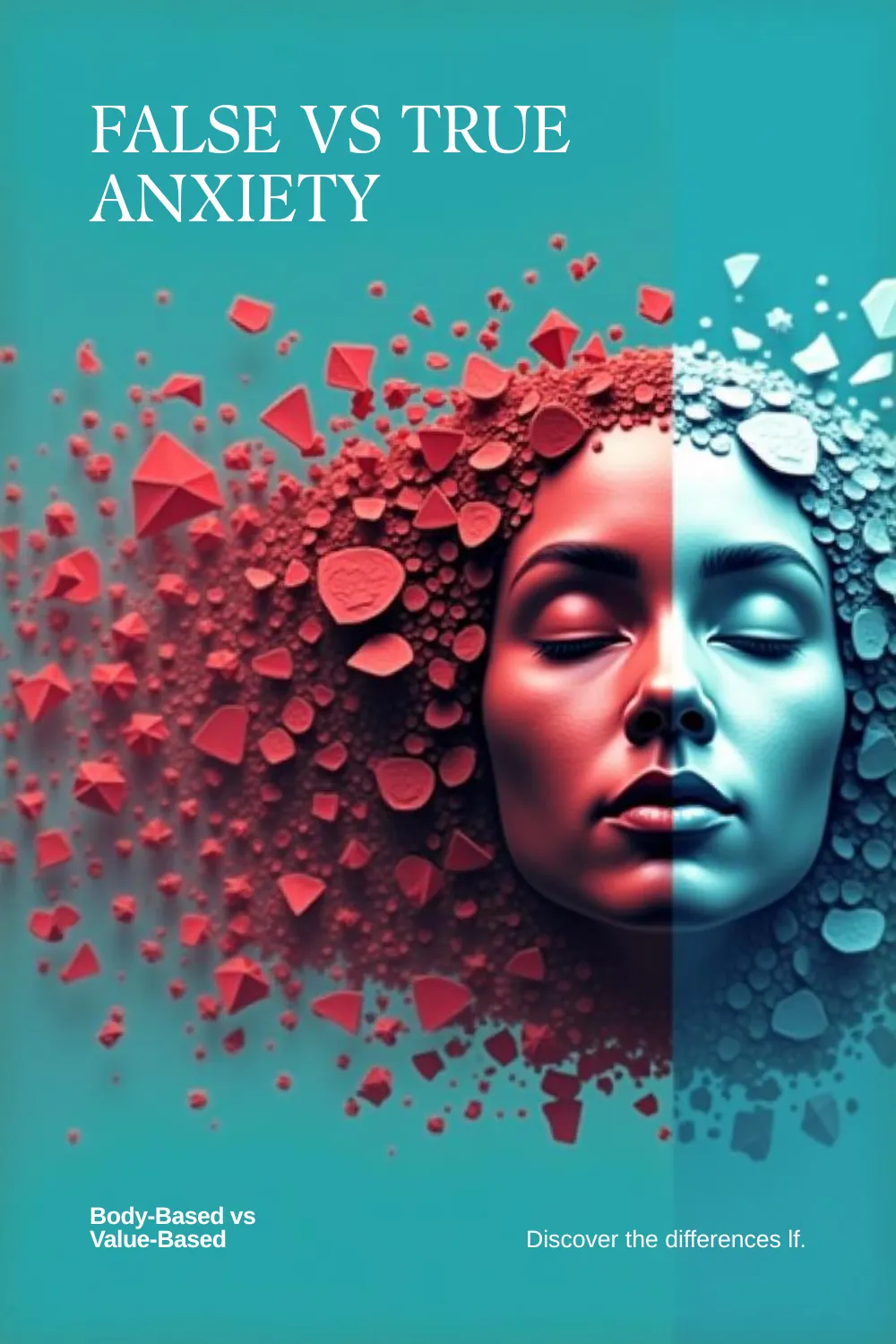
The Difference Between True and False Anxiety

False Anxiety Symptoms
False anxiety is avoidable anxiety, a physical, body-based reaction rather than an emotional or spiritual warning. It’s the body’s alarm system going off when no real danger exists.
Physiological trigger: Caused by imbalances or stressors such as low blood sugar, inflammation, poor sleep, caffeine, or nutrient deficiency.
Mind-body confusion: The mind tries to make sense of the physical feeling by attaching it to a life circumstance (“I’m anxious because of work,” “the news,” etc.), when the true cause is biological.
Real suffering, simple cause: The feelings are real and painful, but the root is something concrete and fixable — like stabilizing blood sugar or reducing inflammation.
Corrective path: Relief comes from addressing the physical cause—through nutrition, rest, hydration, or stress regulation.
Goal: To reduce unnecessary suffering by restoring physical balance.
Example: Feeling anxious after skipping lunch isn’t a spiritual or emotional crisis; it’s a blood-sugar crash signaling the body is out of balance.
True Anxiety Symptoms
True anxiety is meaningful anxiety — a purposeful signal that something in life, values, or environment needs attention.
Inner compass: It points to areas of life that are misaligned — a strained relationship, moral conflict, or dissatisfaction at work.
Purposeful signal: Unlike false anxiety, it isn’t something to eliminate quickly; it’s a messenger prompting reflection and change.
Emotionally adaptive: True anxiety motivates growth, change, and moral awareness rather than pure distress.
Example triggers: Injustice, relational conflict, or a lack of fulfillment in life goals.
Goal: To listen to the signal, identify the deeper issue, and realign your actions with your values and purpose.
Example: Feeling persistent anxiety about a toxic work environment might be your conscience signaling that something meaningful needs to change.